Science for a Healthier Tomorrow

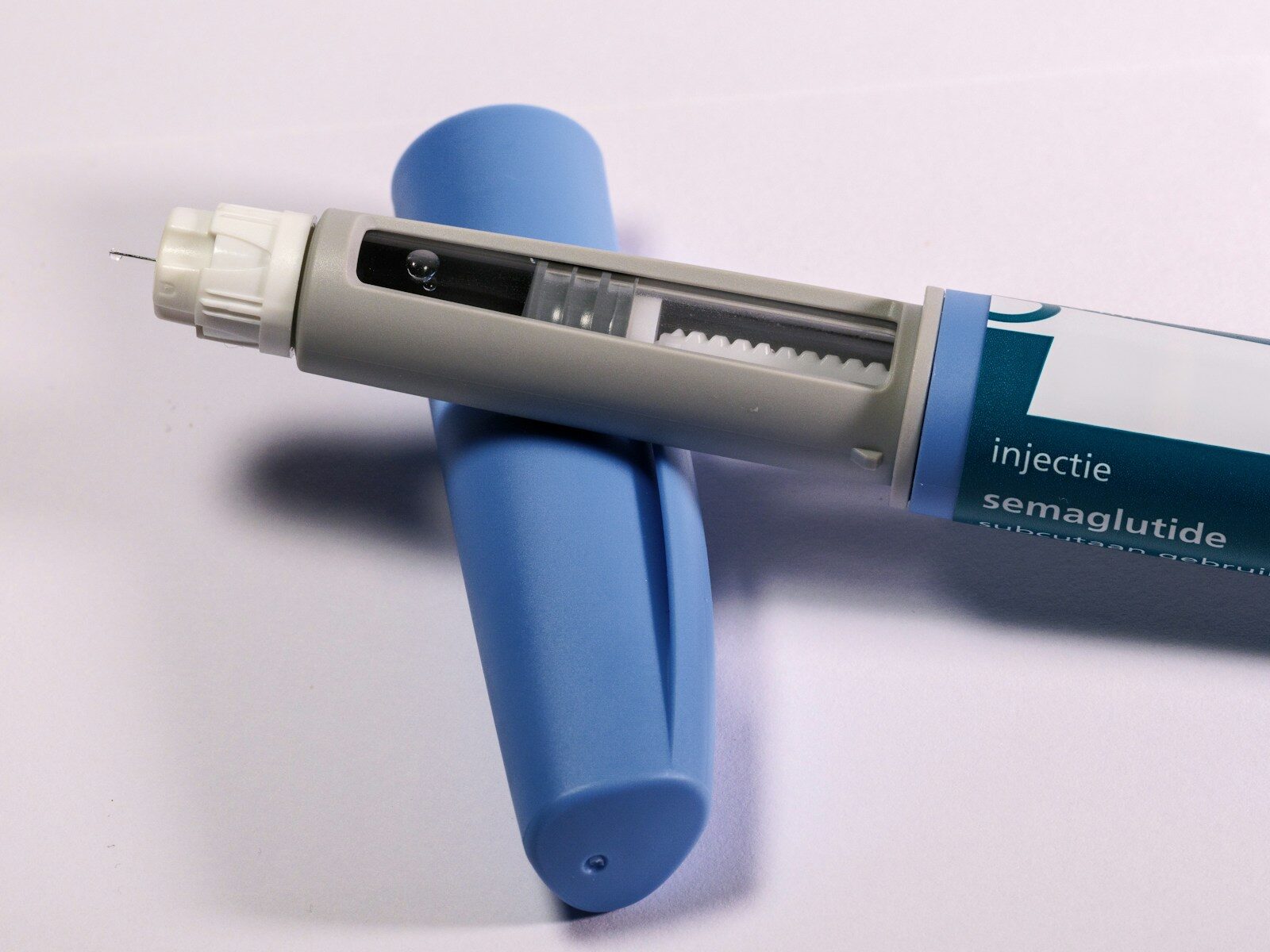

In a cohort of 34,309 Israeli adults who started semaglutide for obesity, about a third had stopped by six months and two-thirds by a year. Stopping was more common in the Arab sector, among people with lower socioeconomic status, and among those who had lost less weight early.
In 34,309 Israeli adults without diabetes who started semaglutide for obesity, 36.5% had stopped by 180 days and 67.6% by 365: about 32% were still taking it at a year. Stopping was more common in the Arab sector and among people with lower socioeconomic status or less early weight loss. No control group; no account of why anyone stopped.
What this means
In one Israeli health system, roughly one in three who started semaglutide for obesity were still taking it a year later, close to two separate US datasets, one from health records and one from commercial insurance claims. Who stopped is measured; why is not. There was no control group, the markers stand in for factors it cannot separate, and no weight or health outcomes appear.
What the cohort found
The study followed 34,309 adults without diabetes who started Wegovy, semaglutide 2.4 mg, from January to May 2025, all insured by Clalit Health Services in Israel. Discontinuation meant a gap over 60 days once coverage ended. By 180 days, 36.5% had stopped; by 365 days, 67.6%. The 32% still taking it at a year is arithmetic, not a reported figure: 100% minus 67.6%.
Who stopped sooner, and what that cannot say
People in the Arab sector stopped at a 65% higher rate than the reference sector (HR 1.65, 95% CI 1.59-1.72); low socioeconomic status, 13% higher (HR 1.13, 1.09-1.17); each percentage point less BMI reduction, 3% higher (HR 1.03, 1.03-1.04). In a day-90 landmark analysis of 28,218 people, those on 0.25 mg rather than 1.0 mg had a higher hazard of later stopping (HR 1.88, 95% CI 1.72-2.06), which the authors report is substantially attenuated after adjustment for early refill adherence. Much of that, then, is adherence, not dose.
None of this is causal: no control group, no account of why any individual stopped. “Arab sector” is a proxy bundling language, geography, clinic access and deprivation that this analysis cannot separate.
How it compares with US data
Two separate US datasets land nearby — one drawn from health records across US medical systems, one from commercial insurance claims. Among 125,474 US adults with overweight or obesity newly starting a GLP-1 weight-loss drug (liraglutide, semaglutide, or tirzepatide), one-year discontinuation was 64.8% (95% CI 64.4-65.2) in the 39% without type 2 diabetes and 46.5% in those with it; among 4,066 commercially insured adults without diabetes, also on any GLP-1 drug, 46.3% were still on treatment at 180 days and 32.3% at a year. One-year figures nearly match; the commercial-claims six-month figure does not: a sign that payer rules shape the early numbers.
What the figure covers
These were adults without diabetes, 67% women, mean age 44.6, in one fund starting January-May 2025; the one-year estimate rests on those with a full year of eligibility. Coverage rules differ from US insurance, so 67.6% is a benchmark, not a prediction for American readers. Only the abstract was available to us at press time — a free full-text route is registered with Unpaywall, but the publisher blocks it to us too; it carries no weight or clinical outcomes, and what follows stopping is in what-happens-when-people-stop-weight-loss-medications. Funding is not stated in the abstract; Crossref lists no funder.
Terms explained
- Persistence: staying on a drug over time; here, from refill records. Adherence, whether filled prescriptions are actually taken, is a different measure.
- Hazard ratio: the ratio of stopping rates between two groups across follow-up; 1.65 means a 65% higher rate.
- Proxy: a stand-in for something the data cannot observe, such as access or deprivation.
Sources
- Primary source: Winter E, Wolff Sagy Y, Reges O, Feldhamer I, Abu Ahmad W, Arbel R, Dicker D, Lavie G. “Early Treatment Trajectory and Long-Term Persistence to Semaglutide for Obesity: A Population-Based Cohort Study.” Diabetes, Obesity and Metabolism. Published online Oct. 29, 2026. DOI: 10.1111/dom.71488 · PMID: 42957437. Peer-reviewed retrospective population-based cohort study; abstract only.
- US benchmark, health-record data: Rodriguez PJ, Zhang V, Gratzl S, Do D, Goodwin Cartwright B, Baker C, Gluckman TJ, Stucky N, Emanuel EJ. “Discontinuation and Reinitiation of Dual-Labeled GLP-1 Receptor Agonists Among US Adults With Overweight or Obesity.” JAMA Network Open 2025. DOI: 10.1001/jamanetworkopen.2024.57349 · PMID: 39888616 · PMC: PMC11786232. Abstract-level access; a separate US dataset drawn from health records, cited for its one-year discontinuation figure only.
- US benchmark, commercial claims: Gleason PP, Urick BY, Marshall LZ, Friedlander N, Qiu Y, Leslie RS. “Real-world persistence and adherence to glucagon-like peptide-1 receptor agonists among obese commercially insured adults without diabetes.” J Manag Care Spec Pharm 2024. DOI: 10.18553/jmcp.2024.23332 · PMID: 38717042 · PMC: PMC11293763. Abstract-level access; a separate US claims dataset, cited for its 180-day and one-year persistence figures only.