Science for a Healthier Tomorrow

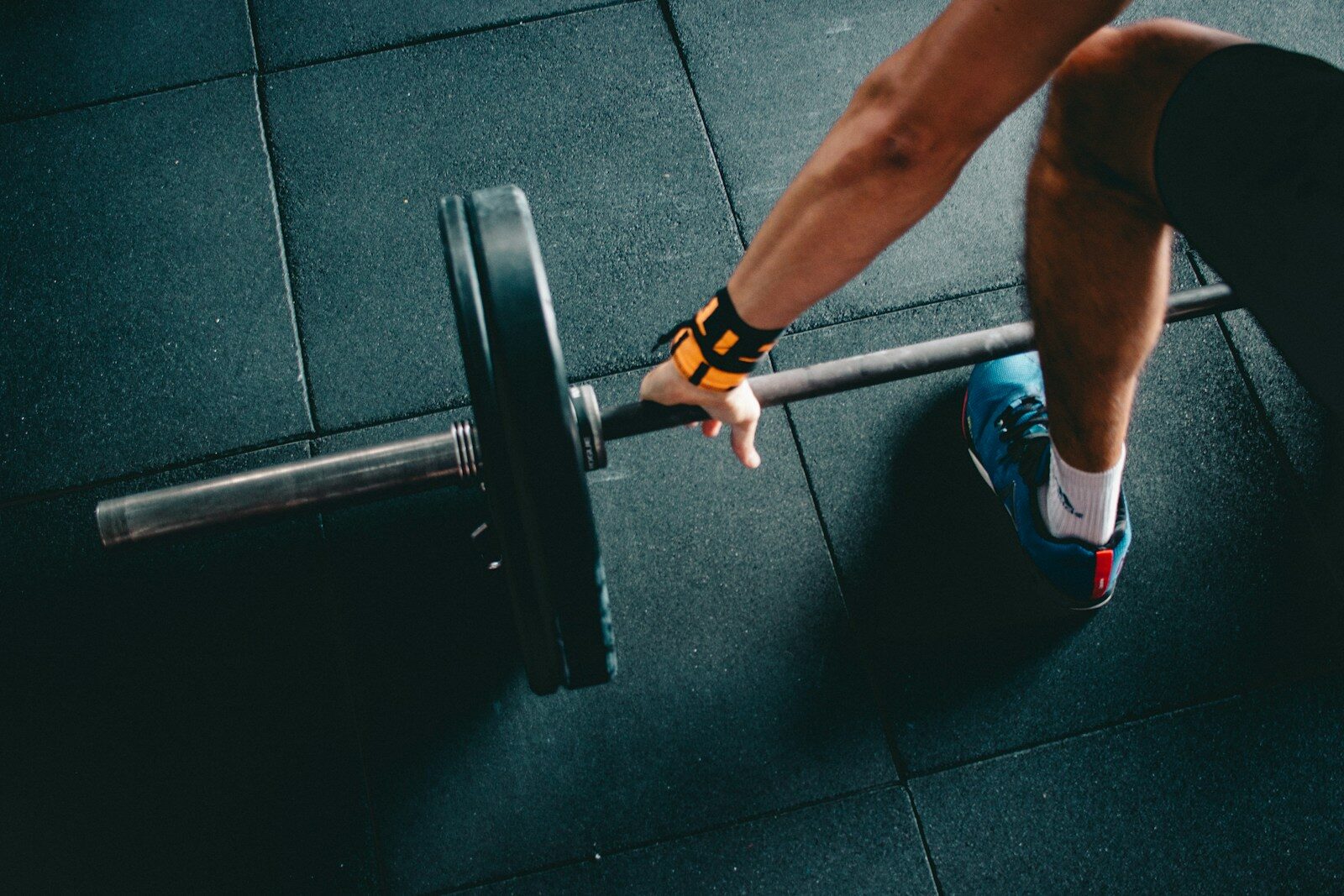

New studies suggest that GLP-1 drugs do not necessarily cause disproportionate lean-tissue loss beyond what occurs with weight loss itself.
You may have seen a striking claim about GLP-1 weight-loss drugs: that as much as 40% of the weight people lose is “muscle.” There is a real number behind that concern. But “40% muscle loss” is not what the studies actually show.
What this means
Claims that GLP-1 weight-loss drugs cause people to lose 40% of their weight as muscle are misleading. That figure comes from scans measuring lean mass, which includes muscle but also water, organs, and other non-fat tissue. Studies show that lean tissue accounts for roughly 15% to 60% of weight lost, but the clearest placebo-controlled comparison found that people taking tirzepatide lost about 75% fat and 25% lean tissue — the same proportions as those taking placebo. This suggests that the drugs do not necessarily cause disproportionate lean-tissue loss beyond what occurs with weight loss itself. Researchers still need to determine how much actual muscle is lost and whether that affects physical function. Meanwhile, a randomized trial found that resistance training reduced lean-tissue loss and improved strength during medication-assisted weight loss.
Do GLP-1 Drugs Really Cause Dangerous Muscle Loss?
The studies usually measure lean mass using DXA scans. Lean mass includes skeletal muscle, but it also includes water, organs, connective tissue and other fat-free tissue. Even body fat itself contains some fat-free material. A DXA scan cannot tell us how much of the measured lean-mass loss was actually muscle.
Across studies of GLP-1 and related weight-loss drugs, lean tissue has accounted for roughly 15% to 60% of total weight lost. That is a wide range, and it matters: it suggests that the proportion is not a fixed effect of the drugs themselves.
More importantly, the clearest placebo-controlled body-composition substudy found that people taking tirzepatide lost about three-quarters fat and one-quarter lean mass — essentially the same proportions as people taking placebo.
So the evidence supports a more measured conclusion: substantial weight loss includes some lean-tissue loss, whether the weight is lost with medication or without it. What remains much less certain is how much of that lean tissue is actual skeletal muscle, whether strength declines with it, and when the loss becomes clinically important.
Where the 40% figure comes from
The number is not invented.
A 2024 review of body-composition studies involving this drug class noted that lean mass represented roughly 40% to 60% of total weight lost in some studies, while in others it represented 15% or less.
One frequently cited example comes from a DXA substudy of STEP 1, the major semaglutide 2.4 mg trial.
The review calculated:
- total body-weight loss: 15.3 kg
- lean-mass loss: 6.92 kg
That makes lean mass approximately 45% of the total weight lost.
But another way of describing the same study sounds much less alarming: the substudy itself reported that total lean mass declined by about 9.7% from baseline.
Those are different denominators.
One asks:
Of all the pounds that disappeared, what percentage were classified as lean?
The other asks:
Of all the lean tissue the person began with, what percentage disappeared?
Both questions are legitimate. But the two figures come from different analyses of the same trial, not from two ways of reporting one measurement, so they do not have to agree. And they still create very different impressions.
A separate semaglutide substudy in people with type 2 diabetes produced another apparently worrying number: about 43% of the weight lost was lean mass.
Yet those participants finished the trial with a greater percentage of their body weight made up of lean tissue, because they had lost proportionally more fat.
Again, both statements can be true.
Lean mass is not the same as muscle
This is the most important limitation of the headline numbers.
DXA divides the body broadly into:
- fat mass,
- bone mineral,
- lean soft tissue.
“Lean soft tissue” includes muscle, but it is not a direct measurement of muscle.
It also includes water, organs, blood, connective tissue and other non-fat tissue.
There is another complication: adipose tissue is not 100% fat. The review notes that as much as roughly 15% of adipose tissue may consist of fat-free components.
That means losing a substantial amount of body fat can itself register partly as a loss of “lean mass” on a DXA scan, even when skeletal muscle is not responsible for all of the change.
So a study showing that 30%, 40% or even 45% of weight loss was classified as lean tissue cannot automatically be translated into:
“30%, 40% or 45% of the weight loss was muscle.”
The scan simply cannot tell us that.
The most useful placebo comparison
One of the most informative datasets comes from the DXA substudy of SURMOUNT-1, the large tirzepatide obesity trial.
A group of 160 adults underwent body-composition scans at baseline and again after 72 weeks.
Among participants taking tirzepatide:
- body weight fell 21.3%
- fat mass fell 33.9%
- lean mass fell 10.9%
Among participants taking placebo:
- body weight fell 5.3%
- fat mass fell 8.2%
- lean mass fell 2.6%
The crucial finding is the proportion.
The investigators reported that approximately 75% of the lost weight was fat and 25% was lean mass in both groups.
In other words, people taking tirzepatide lost much more weight, so they also lost more fat and more lean tissue in absolute terms.
But the drug did not appear to shift the composition of the weight loss toward disproportionately greater lean-tissue loss.
That is an important distinction.
It does not prove that every GLP-1 drug, in every population, preserves lean tissue perfectly. It is one substudy of one medication. But it directly challenges the stronger claim that these drugs necessarily cause an unusually large proportion of muscle loss.
Is 25% lean loss “normal”?
A common clinical rule of thumb is that during weight loss, approximately:
- 75% of the loss is fat
- 25% is fat-free mass
That makes a study reporting 40% or 45% lean mass look unusually concerning.
But even this benchmark is less precise than it sounds.
A review of the so-called “quarter fat-free-mass rule” concluded that it is, at best, an approximation. The proportion varies according to factors including:
- starting body composition
- sex
- calorie intake
- dietary composition
- physical activity
- amount of weight lost
The review of GLP-1 body-composition studies therefore points to a larger problem: researchers still do not have a well-established threshold for how much lean-mass loss during weight reduction should be considered clinically important.
That makes headlines such as “40% of the weight lost is muscle” even less useful. They imply that the field knows both what was lost and how dangerous that amount is. In reality, neither question has been fully answered.
What about actual muscle?
More precise imaging methods such as MRI can measure skeletal-muscle volume rather than lumping all non-fat tissue together.
Those studies generally suggest that muscle volume does decline during substantial weight loss, but that much of the reduction may be proportional to the smaller body the person now has to support.
There may also be beneficial changes that DXA cannot capture well, including reductions in fat stored within muscle and improvements in insulin sensitivity.
This does not mean muscle loss should be ignored.
It may be especially important in older adults, frail people, or people who already have low muscle mass or sarcopenia.
But the available evidence does not justify treating every kilogram of DXA-measured lean-mass loss as a kilogram of lost functioning muscle.
What happens to strength?
This is surprisingly poorly studied.
A 2026 meta-analysis examined handgrip strength in 660 adults treated with semaglutide. It pooled each study’s before-and-after change within participants, not a comparison against placebo.
The average change was only −0.16 kg-force, with a 95% confidence interval ranging from −1.98 to +1.65 kg-force.
That means the pooled studies did not show a clear average decline.
But the certainty of the evidence was rated very low, and the range of possible outcomes was wide enough that a meaningful loss of strength in some people cannot be ruled out.
In other words, the evidence does not currently demonstrate substantial average strength loss — but neither is it strong enough to close the question.
Resistance training changes the picture
One randomized trial has tested the most practical intervention directly: resistance exercise.
In 120 adults receiving tirzepatide for 40 weeks, researchers compared the medication alone with the medication plus three supervised resistance-training sessions each week.
Weight loss was almost identical:
- tirzepatide alone: 22.61 kg
- tirzepatide plus resistance training: 22.28 kg
Fat loss was also similar:
- tirzepatide alone: 17.19 kg
- tirzepatide plus resistance training: 17.98 kg
But lean soft-tissue loss differed:
- tirzepatide alone: 4.67 kg
- tirzepatide plus resistance training: 3.57 kg
Resistance training preserved about 1.1 kg, or 2.4 lb, of additional lean tissue.
The strength results were even more striking.
With tirzepatide alone:
- bench-press strength fell 4.09 kg
- knee-extension strength fell 4.42 kg
With resistance training:
- bench-press strength rose 4.68 kg
- knee-extension strength rose 5.88 kg
The important point is not that tirzepatide somehow protected or damaged muscle on its own.
The major difference came from training.
And even here, the body-composition measurement was still lean soft tissue, not a direct measurement of skeletal-muscle tissue.
What pooled studies tell us
A 2026 systematic review tried to determine whether semaglutide causes greater losses of fat or lean tissue than comparison treatments.
The evidence was too limited to provide a confident answer.
Only three studies, involving 369 participants, could be combined for fat-mass analysis, and just two studies, involving 297 participants, could be combined for lean tissue.
The statistical confidence intervals were extremely wide, and the certainty of evidence was rated low or very low.
That does not prove that the drugs are harmless to muscle.
It does not prove that they are harmful either.
It tells us something more basic: most of the clinical trials were not designed to answer this question well.
So what should we conclude?
Several things appear reasonably clear.
People who lose a substantial amount of weight usually lose some lean tissue along with fat.
Studies of GLP-1 and related medications have found that lean tissue accounts for anywhere from roughly 15% to 60% of total weight lost, depending on the study, population and method of measurement.
But DXA-measured lean mass is not synonymous with skeletal muscle.
And in the clearest placebo-controlled body-composition comparison, people taking tirzepatide lost approximately the same 75% fat / 25% lean proportions as people losing weight on placebo.
So the current evidence does not strongly support the claim that GLP-1 drugs uniquely “burn muscle” or cause lean tissue to disappear out of proportion to the amount of weight being lost.
There are still important unanswered questions.
We need better studies showing:
- how much of the lost lean tissue is actually skeletal muscle
- whether muscle strength and physical function decline
- which patients are most vulnerable
- what amount of muscle loss becomes clinically important
But one practical finding is already fairly clear.
Resistance training can reduce lean-tissue loss and improve strength during medication-assisted weight loss without preventing substantial fat loss.
For someone using these medications, that may ultimately be more useful than arguing over whether a DXA scan labels 25%, 35% or 45% of lost weight as “lean.”
Terms explained
- Lean mass (lean soft tissue): everything DXA does not count as fat or bone mineral — muscle, organ mass, connective tissue, blood and water. Not a muscle measurement.
- DXA: dual-energy X-ray absorptiometry, which sorts body mass into fat, bone mineral and lean soft tissue; it cannot separate muscle from the water inside the lean compartment.
- Fat-free mass (FFM): the same compartment under another name in the weight-loss literature; the “quarter FFM rule” expects about a quarter of weight lost to be fat-free.
- kgf: kilogram-force, the unit a handgrip dynamometer reports.
- Prediction interval: the range in which a future study’s result would be expected to fall — wider than a confidence interval when studies disagree as much as these do.
Sources
- Lean-mass change across the drug class: Neeland IJ, Linge J, Birkenfeld AL. “Changes in lean body mass with glucagon-like peptide-1-based therapies and mitigation strategies.” Diabetes Obes Metab. 2024;26(Suppl 4):16-27. DOI: 10.1111/dom.15728 · PMID: 38937282. Open access; full text read, including Table 1, which tabulates the trial-level weight and lean changes and the fractions derived from them; its footnote marks several of those values, including the STEP 1 row, as back-calculated from reported baselines and mean changes.
- SURMOUNT-1 body-composition substudy: Look M, Dunn JP, Kushner RF, et al. “Body composition changes during weight reduction with tirzepatide in the SURMOUNT-1 study of adults with obesity or overweight.” Diabetes Obes Metab. 2025;27(5):2720-2729. DOI: 10.1111/dom.16275 · PMID: 39996356 · PMC: PMC11965027. DXA substudy, 160 participants, 72 weeks; abstract read, plus the full text’s subgroup and funding statements. Funded by Eli Lilly and Company, which the paper states was involved in study design, data collection, analysis, interpretation and writing. Its correction, 10.1111/dom.70050, was read: it relabels a figure axis; no numbers change.
- MRI-based reading of muscle change: Linge J, Birkenfeld AL, Neeland IJ. “Muscle Mass and Glucagon-Like Peptide-1 Receptor Agonists: Adaptive or Maladaptive Response to Weight Loss?” Circulation. 2024;150(16):1288-1298. DOI: 10.1161/CIRCULATIONAHA.124.067676 · PMID: 39401279. Abstract read; full text paywalled.
- Resistance-training trial: Green DJ, Haynes A, Underwood DR, et al. “Resistance exercise to attenuate lean mass loss during tirzepatide therapy for obesity: a randomized controlled trial.” Nature Medicine. Published online Nov. 9, 2026. DOI: 10.1038/s41591-026-04752-5. Two-arm randomized trial, 120 adults, 40 weeks; ACTRN12623001236684. Abstract and full text read.
- Handgrip meta-analysis: Machado LG, Siedschlag Schmidt PH, Tasca Petroski G, et al. “Changes in Muscle Strength Following Semaglutide Treatment in Adults: A Systematic Review With Meta-Analysis of Handgrip Strength.” Diabetes Obes Metab. 2026, ahead of print. DOI: 10.1111/dom.71432 · PMID: 42897109. Abstract read.
- Systematic review of 19 studies: Lopes Menezes ML, Güntzel Chiappa ME, Kloss RF, et al. “Body Composition Remodelling During GLP-1-Based Therapy: A Systematic Review and Meta-Analysis Using a Hierarchical Physiological Framework.” Diabetes Obes Metab. 2026;28(11):9849-9860. DOI: 10.1111/dom.71220 · PMID: 42608323 · PMC: PMC13646380. Full text and supplement read.