Science for a Healthier Tomorrow

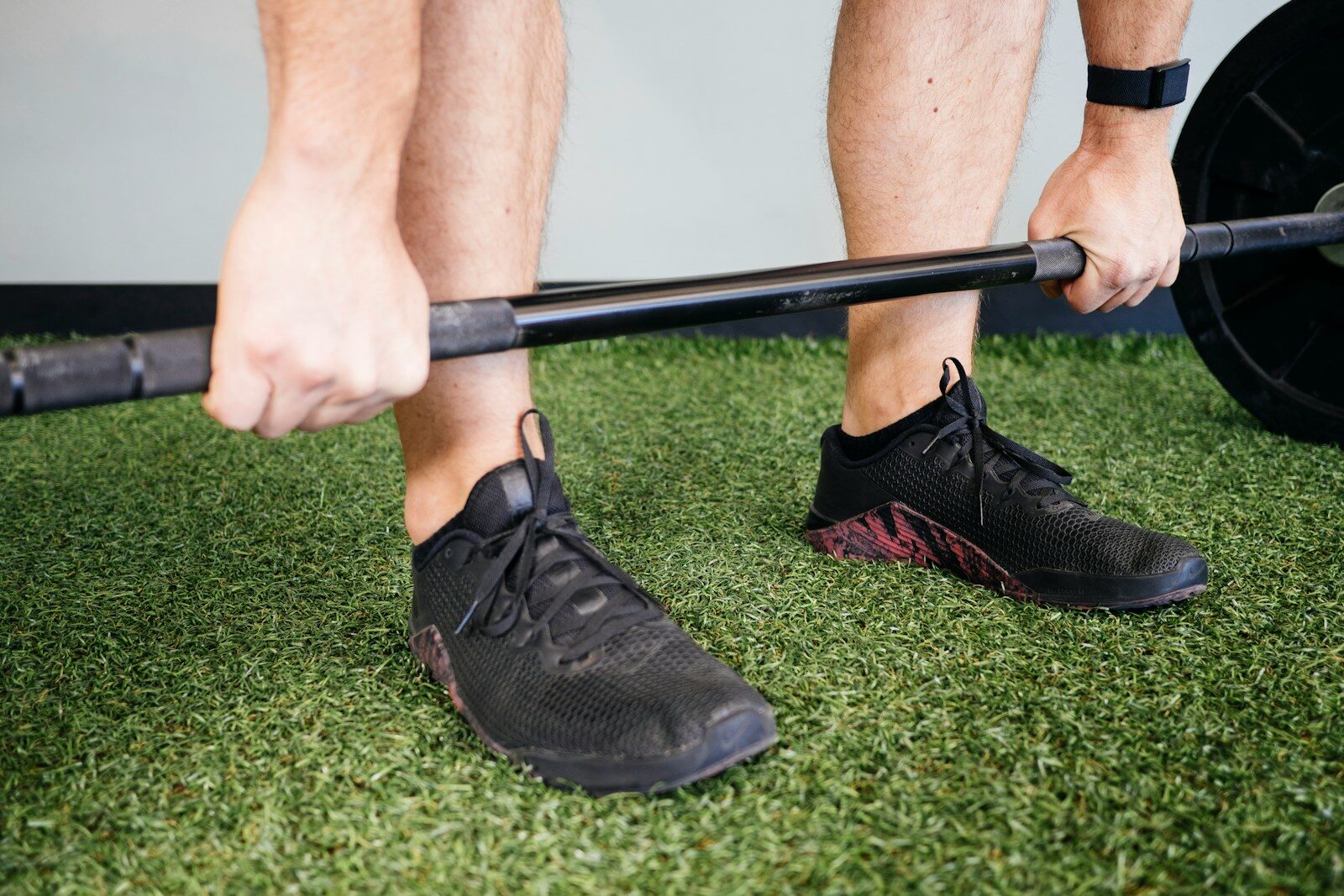

In a 40-week randomized trial of 120 sedentary adults aged 50 to 70, adding three supervised resistance-training sessions a week to tirzepatide cut the loss of lean soft tissue by about 1.1 kg and reversed the fall in strength, without changing weight lost or fat lost. Lean soft tissue on a DXA scan is not muscle, and the authors’ own conversion puts the muscle spared at roughly half a kilogram.
The fear about GLP-1 drugs is that some of the weight you lose is muscle — so could the fix be as simple as a gym routine? When researchers added supervised lifting to tirzepatide for 40 weeks, the training group kept more lean tissue and gained strength while the drug-only group lost both. But the scan used cannot see muscle itself, and the muscle actually spared works out to roughly half a kilogram.
What this means
Everyone took tirzepatide; randomization decided only whether they also trained, so there is no placebo arm. Weight fell 22.61 kg versus 22.28 kg (about 49.8 lb versus 49.1 lb) and fat mass 17.19 kg versus 17.98 kg (about 37.9 lb versus 39.6 lb), with no detectable difference, while lean soft tissue fell 4.67 kg versus 3.57 kg (about 10.3 lb versus 7.9 lb). That measure is only about half muscle; strength testing was unblinded, and no functional or clinical outcome was measured, so the health value of the difference is unknown.
What the trial found
All 120 participants received open-label tirzepatide at a single center in Perth, Australia; 59 were assigned to three supervised, center-based resistance sessions a week for 40 weeks and 61 to usual activity, with concealed allocation, an intention-to-treat analysis adjusted for age and sex, and 111 of 120 (93%) retained; training attendance averaged 91%. At week 40, lean soft tissue had fallen 4.67 kg on the drug alone and 3.57 kg with training — a difference of 1.09 kg, 97.5% CI 0.43 to 1.75, P < 0.001, or roughly a quarter less loss. Neither fat mass nor body weight separated. Fat mass fell 17.19 kg versus 17.98 kg, a difference of −0.77 kg, 97.5% CI −2.14 to 0.60, P = 0.416; body weight fell 22.61 kg versus 22.28 kg, P = 0.694. The 97.5% intervals reflect a Bonferroni adjustment for two co-primary outcomes.
Lean soft tissue is not muscle
DXA divides the body into fat, bone mineral and lean soft tissue. The last is everything else: muscle, but also water inside and between tissues, connective tissue and organ mass. The authors cite roughly 50% muscle for total lean soft tissue and about 70% for the appendicular portion, and the authors’ own conversion puts the two groups’ losses at about 2.5 kg and 2 kg (about 5.5 lb and 4.4 lb) of skeletal muscle — a gap of about 0.5 kg (about 1.1 lb). That is arithmetic, not measurement: no interval accompanies it, and no MRI, CT or creatine-dilution estimate was made.
Loss in both arms flattened after week 24, so the 40-week gap is an accumulated total, not a rate to multiply out. The effect size was small — Cohen’s d 0.10 — even with a decisive P value.
Strength moved further than mass
Strength went the other way. Bench-press one-repetition maximum fell 8.4% on tirzepatide alone, lat pulldown 6.5% and knee extension 9.0%; with training they rose 10.7%, 15.7% and 17.5%. Net differences were 8.59 kg (about 18.9 lb, 18.8%) for bench press, 12.97 kg (about 28.6 lb, 23.4%) for lat pulldown and 9.78 kg (about 21.6 lb, 21.8%) for knee extension.
Those tests were unblinded: participants knew their group, and so did the physiologists administering them — inherent, the authors say, to an open behavioral co-intervention. DXA scans were analyzed blind. A one-repetition maximum measures maximal force in a gym lift, not stair climbing or steadiness, and no functional or fall outcome was recorded.
What the design cannot tell you
Without a placebo arm the trial says nothing about tirzepatide against placebo; it compares training with no training, both on the drug. It is also small and short — 120 people, one center, 40 weeks — powered for a 1.0 kg lean-tissue difference with 47 completers per arm at 80% power; the observed 1.09 kg sits at that margin. The authors say further studies would be needed to show how such differences affect long-term outcomes.
The participants narrow the answer further: 60 men and 60 postmenopausal women aged 50 to 70 with overweight or obesity, all reporting under 60 minutes a week of exercise. The exclusions — diabetes, cardiovascular disease, prior incretin therapy, recent statins or antihypertensives — leave a healthier, more sedentary group than the people most often prescribed incretin drugs.
Where this sits
Two routes to protecting lean tissue on these drugs are in play. The pharmacological one blocks myostatin or activin signaling: in a 24-week phase 2 trial of 102 people, apitegromab added to tirzepatide produced 1.9 kg (about 4.2 lb) less lean-mass loss than placebo (80% CI 1.2 to 2.7; P = 0.001) with similar weight loss. That trial has not shown that preserved mass means better function.
Exercise is older and cheaper. The paper’s discussion cites LIGHT, where liraglutide plus twice-weekly aerobic exercise produced a modest lean-mass gain of about 0.5 kg (about 1.1 lb). What this trial adds is the strength signal — a 19% to 23% net difference in one-repetition maximum — which the antibody trials have not established. Whether the 1.09 kg matters for health is untested; one published counter-argument (PMID 41850248) holds that absolute muscle falls while relative muscle and function do not.
Nutritious News examined the body-composition evidence in “Do GLP-1 Drugs Burn Muscle Along With Fat?”. Related: exercise versus drugs for artery walls, Does Exercise Beat Weight-Loss Drugs for Your Arteries?; muscle without training, does-creatine-build-muscle-without-exercise.
Funding and conflicts
Eli Lilly supplied tirzepatide through an investigator-initiated program and reviewed the protocol and a draft manuscript for intellectual property or new safety issues, without changes; the authors say it had no other role. Four of the 12 authors report speaker honoraria or advisory roles with Eli Lilly, Novo Nordisk, Boehringer Ingelheim, Abbott, Fresenius Kabi or Nutricia, and one of those four holds shares in and advises ProGenis. Registration: ACTRN12623001236684. We read the paper in full; its Extended Data tables and source data files were not opened.
Terms explained
- Lean soft tissue mass: what DXA counts as neither fat nor bone mineral — muscle plus water inside and between tissues, connective tissue and organ mass. About half is muscle; about 70% of the appendicular (limb) portion.
- DXA scan: dual-energy X-ray absorptiometry, a low-dose scan estimating whole-body fat, bone mineral and lean soft tissue; it cannot separate muscle from the water and connective tissue in that compartment.
- One-repetition maximum (1RM): the heaviest weight a person can lift once through a full movement, tested here for bench press, lat pulldown and knee extension; maximal gym force, not everyday function.
- Open-label trial: participants and staff know who gets which treatment. Here everyone knew whether they were training, including the staff who ran the strength tests.
- Intention-to-treat: analyzing everyone in the group they were randomized to, including those who stopped training.
Sources
- Primary source: Green DJ, Haynes A, Underwood DR, Winterton ER, Green AA, Daly RM, George ES, Lester L, Naylor LH, Hillis GS, Fegan PG, Yeap BB. “Resistance exercise to attenuate lean mass loss during tirzepatide therapy for obesity: a randomized controlled trial.” Nature Medicine, advance online publication, November 9, 2026 (open access, CC BY-NC-ND 4.0). DOI: 10.1038/s41591-026-04752-5 · Publisher record: https://www.nature.com/articles/s41591-026-04752-5. Registry: ANZCTR ACTRN12623001236684. No PMID or PMCID was assigned at the time of writing. Full-text access.
- Adjacent pharmacological trial — apitegromab (EMBRAZE): Pratley RE, Denham DS, Trivedi R, et al. “Apitegromab for lean mass preservation during tirzepatide-induced weight loss: a randomized, double-blind, placebo-controlled phase 2 trial.” Nature Medicine 2026;32(7):2673-2678. DOI: 10.1038/s41591-026-04440-4 · PMID: 42260100. Abstract-level access.
- Prior exercise-plus-incretin trial (LIGHT): Lundgren JR, Janus C, Jensen SBK, et al. “Healthy weight loss maintenance with exercise, liraglutide, or both combined.” New England Journal of Medicine 2021;384(18):1719-1730. DOI: 10.1056/NEJMoa2028198 · PMID: 33951361. Abstract-level access; cited as the new paper’s discussion cites it.
- Counter-argument on relative versus absolute muscle: PubMed record 41850248, indexed as the argument that GLP-1 weight loss does not disproportionately reduce muscle. Read only as summarized in the reviewed packet, not in full for this draft.