Science for a Healthier Tomorrow

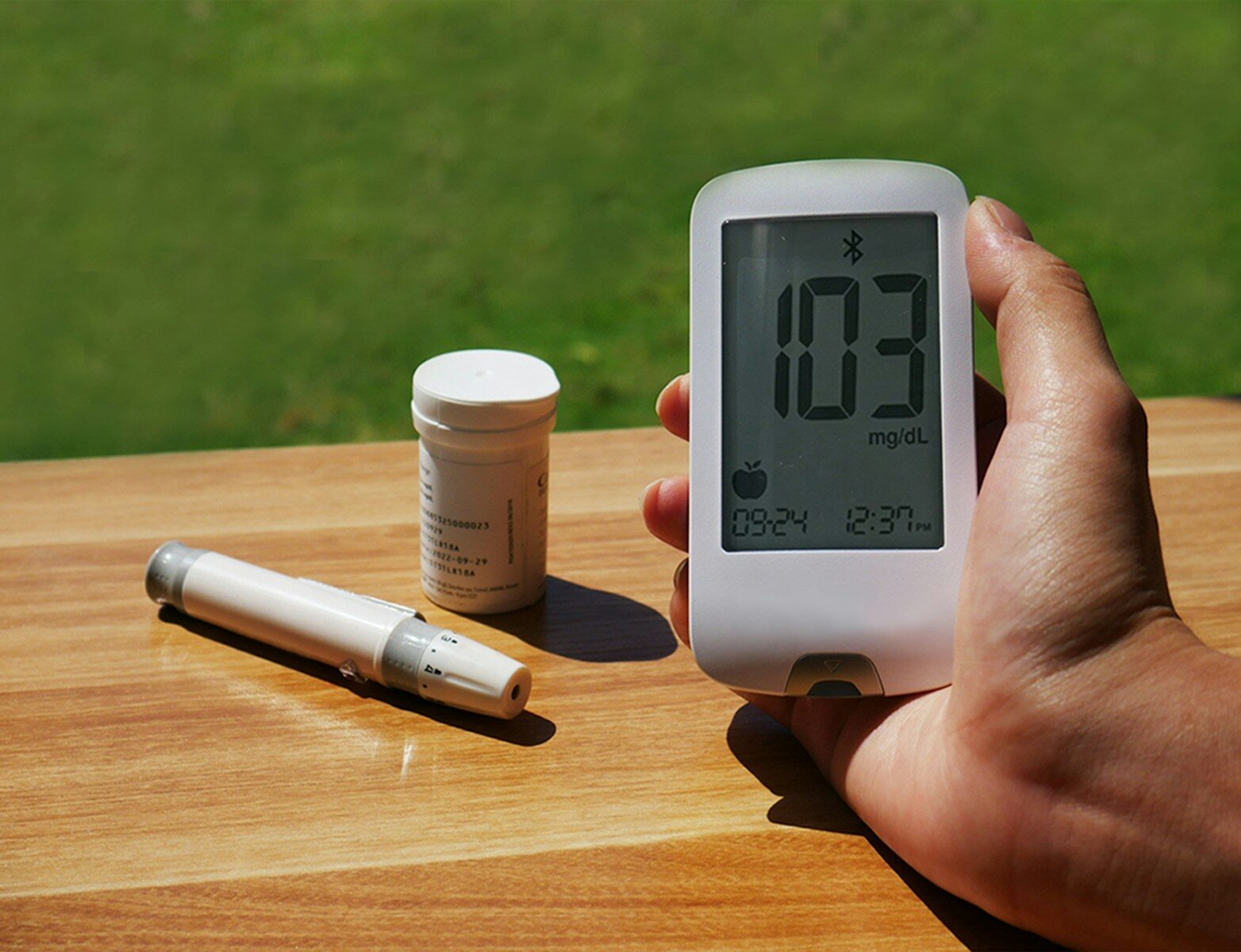

An investigational once-daily oral GLP-1 drug (safiglipron) lowered HbA1c at least as much as the SGLT2-inhibitor dapagliflozin, plus provided some modest weight loss.
In an 810-person phase 3 trial in China, an investigational once-daily oral GLP-1 pill (safiglipron) lowered HbA1c at least as much as the established diabetes pill dapagliflozin over 32 weeks in adults with type 2 diabetes not controlled on metformin, with a modest weight effect and mostly mild-to-moderate gut side effects.
What this means
In an 810-person phase 3 trial in China, an unapproved once-daily oral GLP-1 pill, safiglipron, lowered HbA1c at least as much as the established diabetes pill dapagliflozin over 32 weeks in adults with type 2 diabetes not controlled on metformin. The comparison is against another pill, not against the injectable GLP-1 drugs many people take, so it does not show that safiglipron matches them. The main measure was a blood-sugar lab value, not heart attacks, strokes, or kidney disease — those outcomes were not measured — and the drug is investigational, tested in a trial funded and run by its manufacturer.
What the trial measured
The OUTSTAND-2 trial randomized 810 adults in China whose type 2 diabetes was inadequately controlled on metformin (mean starting HbA1c 8.60%; median diabetes duration 5.0 years; 35.7% women). It compared three once-daily doses of the investigational oral drug safiglipron (30, 60, and 90 mg) with dapagliflozin 10 mg — an SGLT2 inhibitor, a different class of diabetes pill — for 32 weeks at 98 sites, double-blind and double-dummy.
On the primary endpoint — change in HbA1c at week 32 — all three doses were non-inferior to dapagliflozin against a prespecified 0.4-percentage-point margin: the differences versus dapagliflozin were −0.30 (95% CI −0.51 to −0.09), −0.22 (−0.44 to −0.01), and −0.40 (−0.62 to −0.19) percentage points. Only the 90 mg dose also met the superiority test (−0.25 points; 95% CI −0.45 to −0.05; one-sided P=0.0067); the 60 mg dose did not (P=0.0789), and the fixed-sequence testing stopped there. Mean body weight fell by about 2.4% to 4.2% across the safiglipron doses, versus 3.6% on dapagliflozin. Gastrointestinal side effects were more frequent with safiglipron and mostly mild to moderate; discontinuation for side effects over the 52-week treatment period was 3.9% to 4.0% versus 1.5%.
What the comparison cannot show
The endpoint is a blood-sugar lab value at 32 weeks — a surrogate, not proof that the drug prevents complications. Cardiovascular and kidney outcomes were not measured, though a dedicated outcomes trial (RENEW-CKD) is ongoing. The comparator is another pill, not an injectable GLP-1, so “non-inferior to dapagliflozin” is not the same as “as effective as injectable GLP-1 drugs.” The trial ran entirely in China, so how the drug performs in other populations is unknown. The drug is investigational and unapproved, and the trial was funded and run by its manufacturer (Jiangsu Hengrui Pharmaceuticals), which helped design, analyze, and prepare the paper; five authors were company employees and three declare a patent related to safiglipron.
Where it fits
Safiglipron belongs to a new class of oral, non-peptide GLP-1 pills that need no fasting or water restriction, unlike oral semaglutide. The class reference point is orforglipron, the first such agent approved in the US, whose phase 3 ACHIEVE-2 trial also compared it with dapagliflozin on HbA1c (though that trial was open-label). What is new here is that OUTSTAND-2 is, to the authors’ knowledge, the first double-blind phase 3 test of an oral small-molecule GLP-1 drug against an SGLT2 inhibitor — one more brick in a young, mostly company-run evidence base, not a reversal of what came before. A companion trial published the week before tested the same drug against placebo.
Terms explained
- HbA1c — a blood test reflecting average blood sugar over roughly the previous two to three months.
- SGLT2 inhibitor — a class of diabetes pill (here dapagliflozin) that lowers blood sugar by making the kidneys excrete more glucose; a different class from GLP-1 drugs.
- Non-inferiority — a trial design that tests whether a new treatment is not meaningfully worse than an existing one, within a prespecified margin (here 0.4 percentage points of HbA1c).
- Active comparator — the existing treatment a new drug is tested against, rather than a placebo.
- Small-molecule (non-peptide) GLP-1 receptor agonist — an oral GLP-1 drug built from a small chemical molecule rather than a peptide, so it can be taken as a pill without fasting or water restrictions.
Sources
- Primary source: Guo L, Yu D, Xu Y, Tang G, Peng L, et al. “Oral small-molecule GLP-1RA safiglipron versus dapagliflozin in type 2 diabetes: a randomized, double-blind, active-comparator-controlled phase 3 trial.” Nature Medicine, published online 2026-10-05. https://doi.org/10.1038/s41591-026-04713-y (doi:10.1038/s41591-026-04713-y; PMID: 42834229). Full text read (open access, CC BY 4.0). Registration NCT06589765 (Phase 3, 810 participants, completed). Funding: sponsored and funded by Jiangsu Hengrui Pharmaceuticals, which collaborated on design, analysis, and paper preparation; Y.X., G.T., L.P., T.Z., and Z.Y. were company employees, and L.P., Y.X., and Z.Y. declare a patent pending relating to safiglipron.
- Companion trial (abstract-level): “Oral small-molecule GLP-1 receptor agonist safiglipron in early type 2 diabetes: a randomized, double-blind, placebo-controlled trial (OUTSTAND-1).” Nature Medicine, published 2026-09-29. https://doi.org/10.1038/s41591-026-04651-9 (doi:10.1038/s41591-026-04651-9; PMID: 42811187).
- Class comparator (abstract-level): “Orforglipron compared with dapagliflozin in adults with type 2 diabetes and inadequate glycaemic control with metformin (ACHIEVE-2).” The Lancet 2026. DOI: 10.1016/S0140-6736(26)00800-7 · PMID: 42259339.
- Adjacent phase 3 (abstract-level): “Orforglipron, an oral small-molecule GLP-1 receptor agonist, for the treatment of obesity in people with type 2 diabetes (ATTAIN-2).” The Lancet 2025. DOI: 10.1016/S0140-6736(25)02165-8 · PMID: 41275875.