Science for a Healthier Tomorrow

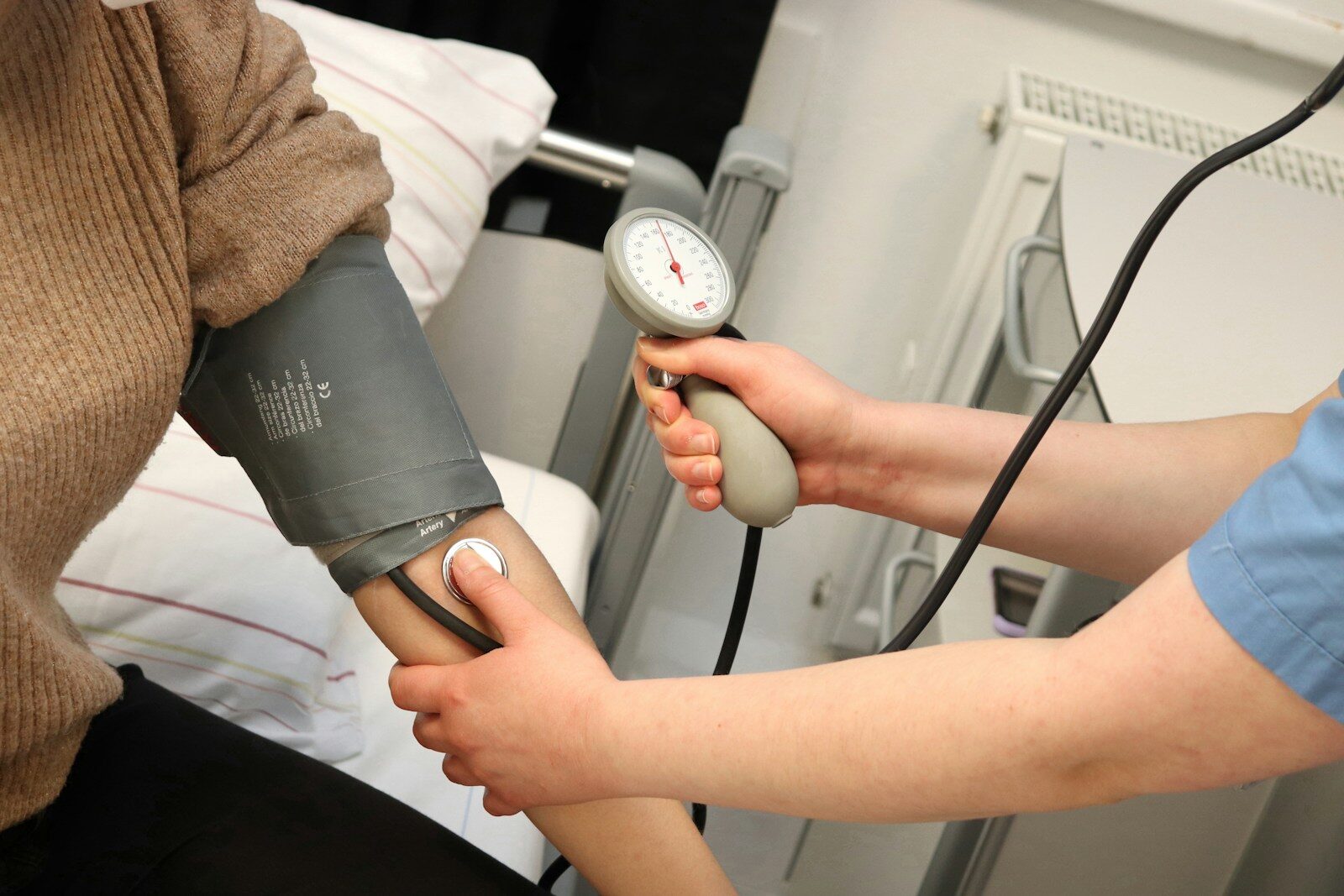

Supervised exercise during a year of weight maintenance showed slightly thinner carotid artery walls and lower inflammation. A result that Liraglutide alone did not produce.
In a prespecified secondary analysis of the S-LiTE trial, one year of supervised exercise during weight maintenance — alone or combined with liraglutide 3.0 mg/day — was associated with a small reduction in carotid artery-wall thickness and lower inflammation markers in 130 adults with obesity, while liraglutide alone produced no such change on this surrogate artery measure.
What this means
In a prespecified secondary analysis of the S-LiTE trial, 130 adults with obesity who did one year of supervised exercise during weight maintenance — whether or not they also took liraglutide 3.0 mg a day — had a small reduction in the thickness of their carotid artery walls (about 7% with exercise, 6% with exercise plus the drug, or roughly 0.04 mm) and lower markers of inflammation, while the drug alone produced no such change. The measured outcome, carotid intima-media thickness, is a surrogate for artery structure, not a count of heart attacks or strokes, so the finding does not show that exercise prevents cardiovascular events better than a weight-loss medication. The analysis was prespecified but secondary, covered 130 randomized participants, and adjusted for no multiple comparisons; how much a change this small matters clinically is stated as uncertain.
The claim, and the study behind it
On October 9, 2026, a Medical Dialogues headline reported that “after weight loss, exercise improves cardiovascular health more than weight-loss medication.” The study behind the headline is real, and its design is stronger than most coverage of it: a prespecified secondary analysis of the S-LiTE trial, peer-reviewed and published in Nature Metabolism on June 24, 2026. The gap is between what was measured and what the headline implies. The outcome was a surrogate — the thickness of the carotid artery wall — measured over a single year of weight maintenance in 130 people, not heart attacks or strokes. The drug’s null result applies to that surrogate measure; it says nothing about whether liraglutide prevents cardiovascular events, which separate trials address.
What the trial measured
S-LiTE was a randomized, placebo-controlled 2×2 factorial trial in adults with obesity (a body-mass index of 32 to 43 kilograms per meter squared), aged 18 to 65, without diabetes, in Denmark. All participants first completed an 8-week low-calorie diet, losing on average 13.7 kg (about 30 lb), or 12.7% of body weight, before randomization. 130 adults with obesity completed the run-in diet and were randomized to one of four weight-maintenance arms for 52 weeks, and this vascular analysis followed those 130 in its per-protocol population: placebo (n=39), exercise (n=26), liraglutide 3.0 mg/day (n=36), and exercise plus liraglutide (n=29). The exercise arms trained under supervision for the year.
The primary measure was change in carotid intima-media thickness (cIMT). After 52 weeks, the exercise group’s cIMT fell by 7% (95% CI 2 to 12%; P=0.01) and the combination group’s by 6% (95% CI 1 to 11%; P=0.02), against no change with liraglutide alone. The absolute change was about 0.04 mm. Among the prespecified supportive markers, the pro-inflammatory cytokines IL-6 and interferon-gamma fell in the exercise-containing groups, and the endothelial-function markers sICAM-1, sVCAM-1 and tPA improved with the combination compared with placebo; liraglutide alone moved none of them. IL-8, IL-10, TNF and vWF showed no significant individual effect.
The limits on interpretation
Four limits matter more than the point estimates. First, cIMT is a surrogate marker of vascular structure. Whether a 0.04 mm change translates into fewer heart attacks or strokes is untested here; the paper states the clinical meaning as uncertain, though it notes that changes of this size fall within the range linked to cardiovascular risk reduction in meta-analyses. Second, this was a prespecified secondary analysis with no adjustment for multiple comparisons across cIMT and the nine tested biomarkers, so the authors caution about an inflated risk of a chance finding. Third, the per-group samples were small — 26 to 39 people — and the primary models were per-protocol; intention-to-treat data reported as a sensitivity analysis did not change the conclusions. Fourth, liraglutide alone was null on every measure, but that is a null on this surrogate within a factorial comparison, not a powered verdict that the drug has no vascular effect. One more caveat sits upstream: because everyone lost weight on the low-calorie diet before randomization, some weight-loss-dependent effect of the drug or exercise may already have been spent before the maintenance year began.
Funding, conflicts and registration
The trial was funded by the Novo Nordisk Foundation (grants NNF15SA0018346, NNF16OC0019968 and NNF15CC0018486) and Helsefonden, and Cambridge Weight Plan supplied the diet-replacement products. The author ties to liraglutide’s maker are extensive: J.J.H. sits on a Novo Nordisk advisory board; L.M.O. is employed at Novo Nordisk (having started after data collection and study end); T.B. has a spouse who works at Novo Nordisk and, with T.B., owns Novo Nordisk stock; S.M. holds advisory-board roles with AstraZeneca, Boehringer Ingelheim, Novo Nordisk, Sanofi and Bayer, lecture fees from AstraZeneca and Novo Nordisk, and research grants from Novo Nordisk and Boehringer Ingelheim; and the senior author, S.S.T., reports research grants, lecture honoraria and an advisory-panel role for Novo Nordisk. The remaining authors declared no competing interests. None of this makes the result wrong, but a trial funded by the drug maker’s foundation, staffed in part by people tied to the maker, and reporting a null for the maker’s drug deserves to be read with that weight attached. The trial is registered as NCT04122716 (EUdraCT 2015-005585-32).
Where this sits
S-LiTE itself already showed that exercise, liraglutide or both maintained weight loss after a low-calorie diet, with the combination adding further loss. A one-year follow-up after treatment stopped found the weight benefit had attenuated, with the combination holding a net 5.1 kg (about 11 lb) advantage over liraglutide alone at week 104, a comparison that did not survive the follow-up paper’s correction for multiple testing. And in a separate landmark trial, SELECT, a GLP-1 receptor agonist (semaglutide) reduced cardiovascular events — a clinical outcome that cIMT only surrogates. That is the tension the headline flattens: the drug that showed nothing on artery-wall thickness in this small maintenance cohort belongs to the same class shown to cut hard cardiovascular events in a much larger trial. The new contribution here is mechanistic and structural — a randomized, factorially designed look at whether exercise, rather than the drug, carries vascular and inflammatory changes during weight maintenance — and it is deliberately narrow. What it leaves open is whether the 0.04 mm difference ever becomes fewer events, and whether any of it persists after treatment stops; the paper’s own data cannot say. Nutritious News has covered the regain-after-stopping question before — see What Happens When People Stop Weight-Loss Medications?; this is a distinct reader question about vascular structure, not a repeat of that coverage.
Terms explained
- Carotid intima-media thickness (cIMT): an ultrasound measure of the thickness of the two inner layers of the carotid artery wall in the neck, used as a structural marker of atherosclerosis.
- Surrogate marker: a measured quantity that stands in for a clinical outcome. cIMT tracks with cardiovascular risk, but it is not itself a heart attack or stroke, so an effect on it does not prove an effect on events.
- Prespecified secondary analysis: an analysis of an outcome or comparison written into the trial plan before data were collected, but not the trial’s primary question. Prespecification reduces, but does not remove, the risk of a chance finding.
- 2×2 factorial design: a trial that tests two interventions at once by assigning every participant to a combination of both — here, exercise or none, and liraglutide or placebo — which lets researchers compare each factor separately and together.
- Estimated treatment ratio (ETR): the ratio of a marker’s level in one group to another’s after modeling; a ratio below 1 indicates a lower level in the treated group.
Keep reading on Nutritious News: Is Metabolic Health More Important Than Weight?.
Sources
- Primary source: Sandsdal RM, Holt J, Alkhefagie HGA, Jørgensen JR, Juhl CR, Olsen LM, Byberg S, Thirumathyam R, Gliemann L, Stallknecht B, Holst JJ, Hove JD, Bandholm T, Bojsen-Møller KN, Madsbad S, Størling J, Bladbjerg EM, Antoniades C, Jensen SBK, Torekov SS. “Effects of exercise and liraglutide on vascular health and inflammation during weight loss maintenance: a prespecified secondary analysis of the S-LiTE trial.” Nature Metabolism 2026;8(7):1483-1488, published online June 24, 2026 (open access, CC BY 4.0). DOI: 10.1038/s42255-026-01554-4 · PMID: 42342869 · PMCID: PMC13400309. Registry: ClinicalTrials.gov NCT04122716. Full-text access.
- Parent trial — S-LiTE primary report: “Healthy Weight Loss Maintenance with Exercise, Liraglutide, or Both Combined.” New England Journal of Medicine, 2021. DOI: 10.1056/NEJMoa2028198 · PMID: 33951361. Abstract-level access; cited for the parent-trial design and weight outcomes only.
- Follow-up — one year after treatment stops: “Healthy weight loss maintenance with exercise, GLP-1 receptor agonist, or both combined followed by one year without treatment.” EClinicalMedicine, 2024. DOI: 10.1016/j.eclinm.2024.102475 · PMID: 38544798 · PMCID: PMC10965408. Abstract-level access; cited for the attenuated weight benefit at week 104.
- Adjacent landmark — clinical cardiovascular outcomes: “Semaglutide and Cardiovascular Outcomes in Obesity without Diabetes (SELECT).” New England Journal of Medicine, 2023. DOI: 10.1056/NEJMoa2307563 · PMID: 37952131. Abstract-level access; cited for the GLP-1 event-reduction contrast only.
- News signal (framing only, not evidence): “After weight loss, exercise improves cardiovascular health more than weight-loss medication: Study.” Medical Dialogues, 2026-10-09. https://medicaldialogues.in/amp/cardiology-ctvs/news/after-weight-loss-exercise-improves-cardiovascular-health-more-than-weight-loss-medication-study-180650 — cited for press framing, corrected against the primary source.