Science for a Healthier Tomorrow

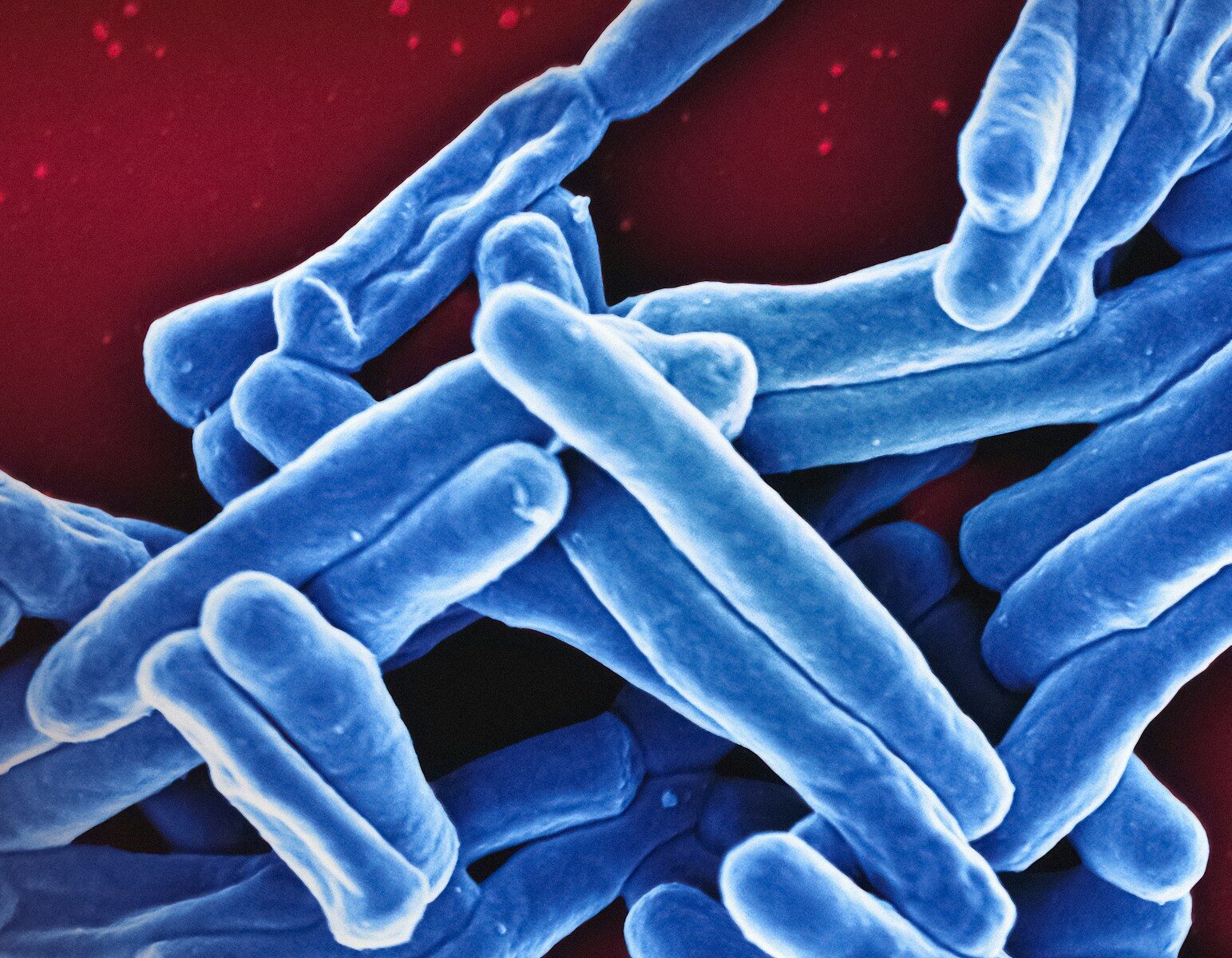

The subset who lost weight showed shifts in gut bacteria and in appetite, and self-control-related brain activity. But the study has limits.
Preliminary: in an uncontrolled study, 25 adults who lost weight showed gut-bacteria and appetite-related brain-activity shifts that tracked together — correlational, responder-selected and not replicated.
What this means
Preliminary: 25 obese adults who lost weight on a roughly two-month intermittent energy restriction program showed shifts in gut bacteria and in appetite- and self-control-related brain activity, and the two tracked each other. There was no control group, and only 25 of the 35 who completed were analysed: neither change was shown to cause the other, and none of this shows that weight loss rewires the brain.
Does the “surprising changes in the brain” headline hold up?
ScienceDaily’s 31 May 2026 headline said intermittent fasting “triggers surprising changes in the brain.” The paper is not 2026 news — it was published 2023-12-20, and the press page re-ran that release. “The gut and the brain work together” is a proposed mechanism this study cannot test, and Nutritious News is declining the causal framing.
What the study found
The 25 analysed adults (BMI 28–45; all with a well-controlled metabolic condition) averaged 97.53 kg (about 215 lb) before the program and 89.92 kg (about 198 lb) after (P<0.001). Resting-state brain scans showed lower regional homogeneity in appetite and self-control regions, with no significant change in the reward circuit. In the gut, E. coli fell across the program while three “obesity-related” species — F. prausnitzii, P. distasonis and B. uniformis — rose during the intensive phase, peaked at its midpoint, then fell back toward baseline. The bacterial and brain changes correlated over time.
What it can’t tell you
With no control arm, time, the dietitian contact and the weight loss itself are indistinguishable from any program effect. Only the 25 who “successfully lost weight” were analysed, out of 35 completers and 41 recruited; comparisons were exploratory, with no multiplicity control described. The claimed registration carries no number and cannot be checked, and two authors work for microbiome-adjacent companies. The authors state the study “did not establish causation,” the surrounding field is mostly associative or preclinical, and this result is unreplicated.
Related coverage: whether eating timing changes metabolism (does-time-restricted-eating-work).
Terms explained
- Intermittent energy restriction (IER): an eating pattern that alternates days of sharply reduced intake with less restricted days, rather than cutting calories evenly every day. Here it ran about two months: a 4-day baseline, a supervised inpatient phase at progressively lower intake, then 30 days at home.
- Functional MRI and regional homogeneity (ReHo): functional MRI measures brain activity indirectly, through blood-flow signals. ReHo is a resting-state measure of how synchronised activity is among neighbouring brain regions; the study reports lower ReHo in appetite and self-control regions after the program.
- Brain-gut-microbiome (BGM) axis: the proposed two-way communication between the gut, its resident microbes and the brain. It is a framework for generating hypotheses; this study measured correlations within it, not the communication itself.
- Association vs causation: an association is a statistical link between two measured things; causation means one produces the other. Correlated changes in bacteria and brain activity support the first, not the second.
Sources
- Primary source: Zhou J, Wu X, Xiang T, Liu F, Gao H, Tong L, Yan B, Li Z, Zhang C, Wang L, Ou L, Li Z, Wang W, Yang T, Li F, Ma H, Zhao X, Mi N, Yu Z, Lan C, Wang Q, Li H, Wang L, Wang X, Li Y, Zeng Q. “Dynamical alterations of brain function and gut microbiome in weight loss.” Peer-reviewed single-arm, within-subject pre-post study; published online 2023-12-20 (received 2023-07-30, accepted 2023-10-13). DOI: 10.3389/fcimb.2023.1269548 · PMID: 38173792 · PMCID: PMC10761423. Open access (CC-BY); full text read.
- Press signal (discovery/framing only, not evidence): “Intermittent fasting triggers surprising changes in the brain.” ScienceDaily, dated 31 May 2026, re-running this paper’s Frontiers release; the page names the 2023 paper in its Journal Reference block. sciencedaily.com/releases/2026/05/260530004622.htm
- Landscape — population-scale diet-microbiome study: “Gut micro-organisms associated with health, nutrition and dietary interventions.” Nature 650, 2025; more than 34,000 US/UK participants. DOI: 10.1038/s41586-025-09854-7 · PMID: 41372407 · PMCID: PMC12893911 (abstract-level access). Different design and question; not a supersession of the primary study.
- Landscape — fasting-microbiota mechanism work: “Microbiota fasting-related changes ameliorate cognitive decline in obesity and boost ex vivo microglial…” Gut 2025. DOI: 10.1136/gutjnl-2025-335353 · PMID: 40335161 · PMCID: PMC12917722 (abstract-level access). Randomized human dietary trial (96 participants) with additional mouse/ex-vivo microglial mechanism work; not a weight-loss intervention study on this article’s question.
- Landscape — review of the proposed axis: “Microbiota-Gut-Brain Axis and Impaired Satiety in Individuals with Obesity: A Potentially Bidirectional…” Current Nutrition Reports 2025. DOI: 10.1007/s13668-025-00682-9 · PMID: 40627229 (abstract-level access). The theoretical frame the primary study tests, without causal resolution.